Pickett Engineering’s corruption investigation
Turtles All the Way DownPickett Engineering’s corruption investigation links a major construction company, unfinished public works, and the persistent sewage pollution of the White River. Allegations that the company secured a renewed infrastructure contract by bribing state officials turn the river’s contamination from background scenery into evidence of a civic failure: the project intended to address the overflows remained incomplete, while the company facing scrutiny had first received and then regained the work.
Scope and public record
The investigation concerns Pickett Engineering, an Indianapolis-based construction firm employing more than ten thousand people worldwide, and its CEO, Russell Pickett. When Aza Holmes and Daisy Ramirez hear a radio report, the company is presented both as a large employer and as the subject of a police inquiry into fraud and bribery. The report says that Russell disappeared the night before police raided his home in connection with that investigation. He had last been seen at his riverside compound on September 8, and the company was offering a $100,000 reward for information about his whereabouts.
Aza’s subsequent research broadens the picture beyond the immediate criminal inquiry. Newspaper accounts described Russell as a frequent defendant: among the disputes were a downtown real-estate deal that generated multiple lawsuits, sexual-harassment suits brought by his former executive assistant and the company’s chief marketing officer, and a suit by an estate gardener alleging violation of the Americans with Disabilities Act. The accounts also indicated that Russell had resolved the lawsuits through settlements. That civil record did not itself establish criminal guilt, but it gave Aza a picture of a company leader repeatedly surrounded by allegations of misconduct.
The sewer project and alleged bribery
The investigation’s public-works background reaches back fifteen years, when the government set aside money to help clean up the White River. Plans included building more sewage-retention pools and expanding a tunnel system beneath downtown that would divert Pogue’s Run. The stated aim was that, within a decade, rain would no longer cause sewage to overflow into the river. The infrastructure was therefore meant to change a recurring condition of city life, not simply to produce a single construction project.
Pickett Engineering received the initial contract but failed to complete the work, and the project went substantially over budget. The government withdrew the contract and opened the unfinished work to competing bids. Despite its earlier performance, Pickett Engineering won the replacement contract. Aza’s research indicates that the company apparently did so by bribing state officials. This sequence gives the allegation its particular force: the firm accused of corruptly securing public work had already left the work incomplete, and the new award offered another opportunity to finish a project whose purpose was to curb pollution.
The suspected conduct had consequences within the company before Russell was charged. Two Pickett Engineering executives had been arrested and were believed to be cooperating with police. Their arrests placed the inquiry beyond public criticism or civil litigation, but the evidence presented in Aza’s research still distinguishes what was alleged from what had been formally established: Russell himself had not yet been charged.
Russell Pickett and the unresolved case
The investigation and Russell’s disappearance overlap without resolving each other. The radio report connects his disappearance to the timing of the police raid, but does not say that the investigation had proved his guilt or explain where he went. The reward makes that uncertainty tangible: the company was publicly seeking information about its own missing CEO even as authorities investigated the company’s conduct.
Three days before Russell disappeared, an Indianapolis Star editorial argued that the available evidence was sufficient to indict him and questioned why the authorities had not done so. The editorial records pressure for action, not a judicial finding. Together, the newspaper coverage, the arrests of two executives, the anticipated cooperation with police, and the fact that Russell remained uncharged describe an inquiry that was active but unresolved at the time of his disappearance.
The unfinished tunnel and the river
The project’s failure remains legible in the landscape. Years after Aza and her mother had paddled along the White River, Aza describes the river as beautiful in the abstract but polluted by sewage. Rain overwhelmed the sewers, sending waste from Central Indiana directly into the water. Her distinction between the river’s scenic setting and its actual condition echoes the gap between the public promise of the infrastructure project and the unfinished work on the ground.
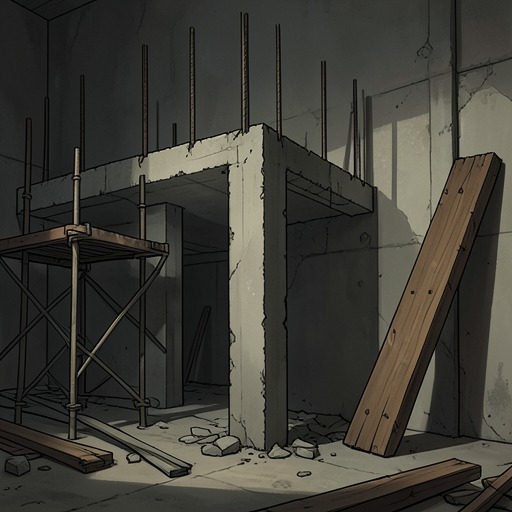
Later, Aza and Daisy reach the Pogue’s Run tunnel and encounter the creek running through the concrete structure. The tunnel is still a place they can enter and look through, not a completed solution to the overflow problem. When Daisy wonders whether the project will ever be finished, Aza says she hopes it will remain unfinished so they can return in ten or twenty years; Daisy answers with bitter irony, crediting Russell’s corruption and incompetence for the spectacle of the site. Their exchange does not turn pollution into a benefit. Instead, it holds their attachment to a place beside the cost of the failure that left it as it is.
That contrast gives the corruption investigation an environmental dimension: public money, contract decisions, and alleged bribery are connected to an unfinished intervention, while sewage continues to enter the river when it rains. The investigation’s significance thus extends beyond Russell’s legal exposure or disappearance. Its subject is also the distance between a promised remedy and the polluted water and incomplete tunnel that remain.